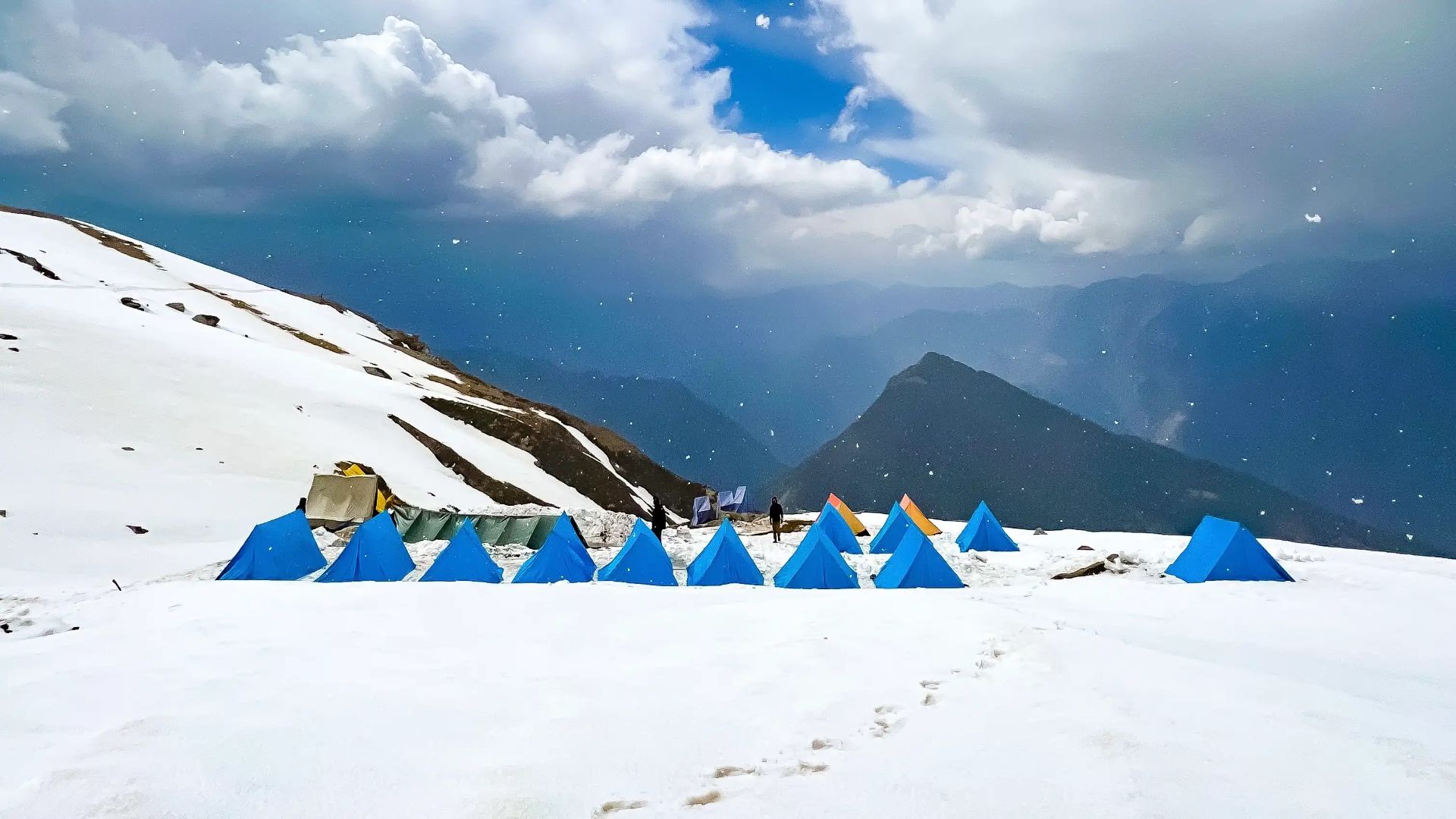
The brochure photos show thick snow and igloos every time. The honest version: when Sethan and Solang camps are actually snow-reliable, what's genuinely included, and the safety basics operators don't always lead with.
In this article
- The photos are real. They're just not from every date.
- Where these camps actually run
- The reliable window, and what "reliable" actually means
- What's genuinely included vs what gets upsold
- Safety basics operators don't always lead with
- Pairing snow camping with the rest of a Manali-Kasol trip
- Frequently asked questions
- When is the best time for snow camping near Manali?
- Is snow guaranteed at Sethan or Solang snow camps?
- What's included in a standard snow camping package?
- Is snow camping near Manali safe?
- How cold does it get while snow camping near Manali?
- Sethan or Solang — which is better for snow camping?
The photos are real. They're just not from every date.
Every snow camping package near Manali uses the same marketing images: thick white snow, a cluster of alpine tents, someone building a snowman by firelight. Those photos are genuine — they're just usually shot in mid-January, at the peak of the season, and used year-round regardless of when you're actually booking. If you book a snow camp in early December or a dry stretch in late February expecting that exact scene, you may land on slushy, patchy ground with barely enough snow for a snowball. We'd rather tell you that upfront than let you find out on arrival.
Where these camps actually run
Sethan Valley and Solang Valley are the two main snow-camping bases near Manali, with Hampta also used by some operators. Sethan sits higher and holds snow more reliably through the season; Solang is more accessible and busier, with a wider range of operators competing for the same stretch of valley. Neither location guarantees snow on a fixed date — mountain snowfall varies year to year and even week to week, and no operator can promise a specific depth for a booking made months in advance.
The reliable window, and what "reliable" actually means
December and January generally deliver the best snowfall, with the most consistent, thick coverage typically landing between mid-January and mid-February. That's a planning guideline, not a guarantee — a warm spell in late January can thin the snow just as easily as an early December cold snap can bring it in ahead of schedule. If snow is the entire point of the trip rather than a bonus, book as close to your travel date as you reasonably can and ask the operator directly what conditions looked like in the past week, not what the brochure photo shows.
What's genuinely included vs what gets upsold
Standard packages typically include alpine-tent accommodation on a sharing basis, three meals a day served buffet-style with tea and snacks, and a campfire or music session in the evening. That baseline is usually solid across operators. Where packages diverge is the add-on activities — snowmobiling, tubing, guided snow-trekking — which are often quoted separately and can roughly double the advertised base price once a group actually books them on-site. Ask for a full itemised cost before you arrive, including which activities are genuinely weather-dependent and might not run at all if snow conditions are thin that week.
Safety basics operators don't always lead with
Sethan and Solang sit at altitude, and a winter night in a tent is a meaningfully colder experience than most first-timers expect — pack for temperatures well below what the daytime forecast suggests, and check that the operator provides sleeping bags rated for the actual overnight low, not just a generic "warm bedding" line in the package description. Reputable operators run these camps under guided supervision with basic safety briefings before any snow activity; if an operator can't clearly explain what happens in case of a medical issue at a remote campsite, that's worth asking about directly before booking, not something to assume is handled.
Pairing snow camping with the rest of a Manali-Kasol trip
Snow camping works best as one day or one night within a longer trip rather than the entire itinerary — pair it with Manali's regular sightseeing and, if your route continues on, a slower stretch in Kasol and the Parvati Valley. If your dates are flexible and snow is the priority, check our month-by-month guide to Manali's snow season before locking in a booking.
Frequently asked questions
When is the best time for snow camping near Manali?
Generally December through January, with mid-January to mid-February the most consistently snow-reliable window. Conditions still vary year to year, so confirm recent snowfall with the operator close to your travel date.
Is snow guaranteed at Sethan or Solang snow camps?
No. Snowfall varies by year and week, and no operator can guarantee a specific depth for a date booked months in advance. Sethan tends to hold snow more reliably than Solang due to altitude.
What's included in a standard snow camping package?
Typically shared alpine-tent accommodation, three buffet-style meals with tea and snacks, and an evening campfire or music session. Activities like snowmobiling or tubing are usually extra.
Is snow camping near Manali safe?
Generally yes with a reputable, guided operator, but confirm sleeping bag ratings for actual overnight temperatures and ask what their emergency plan is at a remote campsite before booking.
How cold does it get while snow camping near Manali?
Overnight temperatures can drop well below freezing in peak winter, colder than daytime forecasts suggest. Pack accordingly and don't rely solely on the operator's tents and bedding without checking their rating.
Sethan or Solang — which is better for snow camping?
Sethan generally holds snow more reliably due to higher altitude and feels less crowded; Solang is easier to access and has more operators to choose from, which can mean more competitive pricing.
Ready to plan a trip that pairs snow camping with the rest of Manali and Kasol? See our Manali-Solang-Kasol snow camps trip or browse all our trips.
Wondrr Team
Travel Curators